

Bot Telegram
Multi-Chain Sniping Bot: Auto-Buy New Tokens on Solana, Base, and EVM at Liquidity Launch 2026
Aug
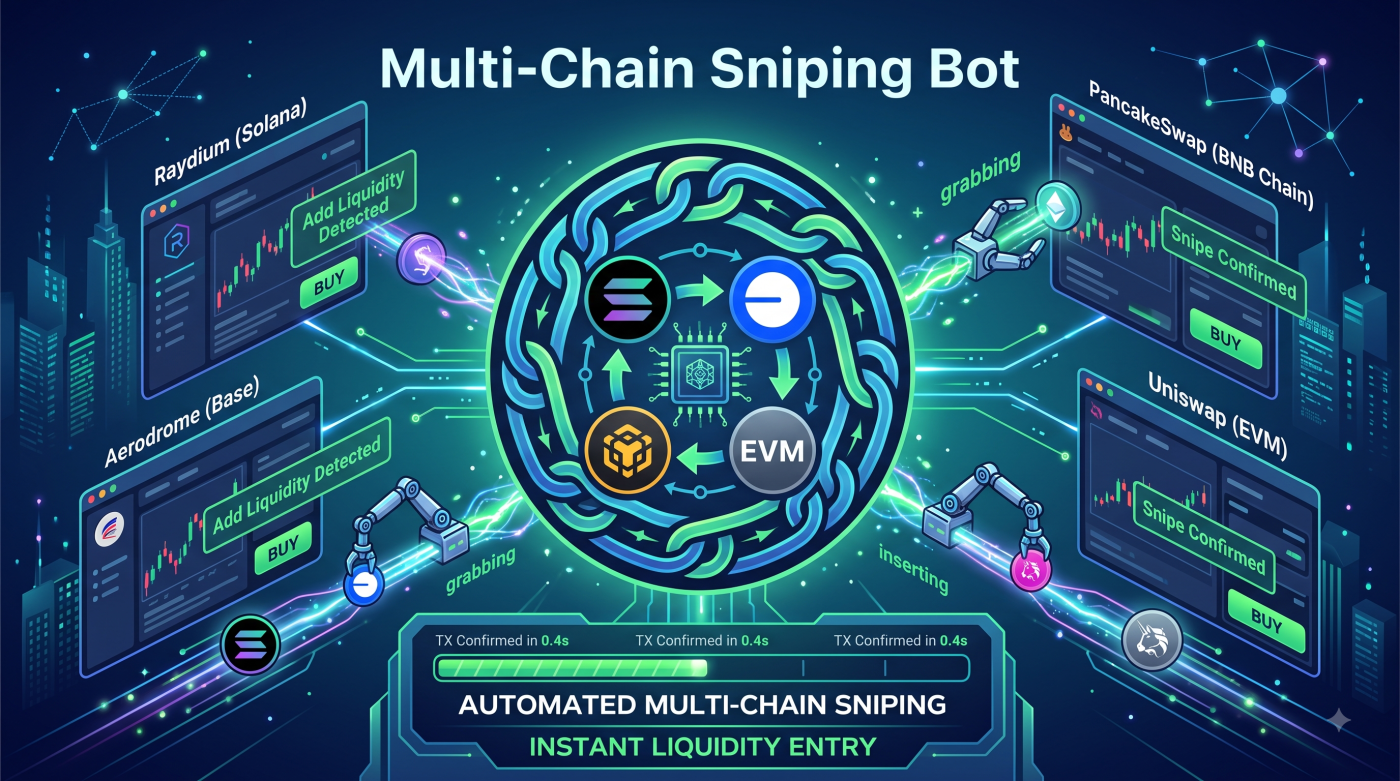
Comprehensive guide to Multi-Chain Sniping Bots: Learn how automated scripts scan mempools, simulate smart contracts, and snipe new tokens on Solana, Base, BNB Chain, and EVM DEXs the exact millisecond liquidity is added.
A Multi-Chain Sniping Bot is an automated algorithmic trading tool engineered to detect, simulate, and purchase newly listed crypto tokens within milliseconds of liquidity deployment. By bypassing standard decentralized exchange (DEX) graphical interfaces and connecting directly to dedicated RPC nodes, validation layers, and block-builder relays, sniping bots secure early entry pricing before broader market participants can react.
As decentralized finance expands across diverse architectures—from high-throughput chains like Solana to Layer-2 networks like Base and legacy Layer-1 platforms like BNB Chain—modern sniping software must adapt to distinct mempool behaviors, execution engines, and consensus rules.
How Automated Liquidity Sniping Works
The lifecycle of an automated liquidity snipe follows four distinct, highly optimized phases:
-
Mempool & Event Streaming: The bot continuously monitors the network via dedicated WebSocket (WSS) endpoints or gRPC streams. It scans for specific factory contract triggers, such as
PairCreated,addLiquidityETH(), or pool initialization instructions on platforms like Raydium, Pump.fun, Uniswap, and PancakeSwap. -
Pre-Flight Contract Simulation: Before broadcasting capital, the bot forks the local chain state to run a dry-run transaction. This simulation checks for malicious code, honeypots, hidden mint authorities, excessive buy/sell taxes, and wallet blacklist logic.
-
Priority Routing & MEV Bundling:
-
Solana Ecosystem: Transactions bypass standard gossip networks and are bundled directly to Jito-enabled validator block engines with dynamic tip amounts.
-
EVM Chains (Base, BNB Chain, Ethereum): Transactions utilize private RPC endpoints (such as Flashbots or MEV-Blocker relays) combined with aggressive
maxPriorityFeePerGasbribes to prevent adversarial front-running and sandwich attacks.
-
-
Automated Trade Management: Once the buy transaction confirms, the bot immediately establishes automated exit rules, tracking target profit multipliers (e.g., 2x, 5x) or activating dynamic trailing stop-losses.
Multi-Chain Technical Breakdown
| Metric / Parameter | Solana (Raydium / Pump.fun) | Base (Aerodrome / Uniswap v2/v3) | BNB Chain (PancakeSwap) |
| Mempool Structure | No public mempool (Jito / gRPC) | Sequencer-based (Rollup mempool) | Public P2P Mempool |
| Block Time | ~400 ms | ~2,000 ms (Target L2 window) | ~3,000 ms |
| Priority Optimization | Compute Units + Jito Tip Bribe | Priority Gas Fees + MEV Relays | Standard Gas Bribes / Flashbots |
| Network Fee Range | $0.001 – $0.05 per execution | $0.01 – $0.15 per execution | $0.10 – $0.35 per execution |
| Primary Execution Risk | Slot drops & leader skips | Sequencer reordering | Honeypots & high-slippage traps |
Critical Enterprise Features for Token Sniping
-
Honeypot & Malicious Logic Filtering: Automated checks ensure the token contract has renounced ownership, contains reasonable fee parameters (typically under 10%), and enables unrestricted
transfer()andapprove()functions for all buyer addresses. -
Anti-MEV Private Routing: Direct transmission to private block builders ensures predatory searchers cannot spot the pending buy order in a public pool and execute a sandwich attack against your position.
-
Multi-Wallet Concurrency: Distributing trade volume across dozens of pre-funded burner wallets allows operators to accumulate positions without triggering smart contract anti-whale restrictions (
maxWalletormaxTxAmount). -
Liquidity Lock Verification: The bot programmatically queries locking lockers (e.g., Team Finance, Uncx) or checks that LP tokens have been routed to a verifiable burn address (
0x000...dead) before validating a trade.
Essential Risk Management Protocols
Automated sniping involves extreme capital volatility and structural execution risk. Secure operations require strict execution discipline:
-
Use Isolated Burner Wallets: Never connect a primary treasury or cold storage wallet to automated execution scripts. Fund dedicated burner wallets only with the precise capital allocated for that specific session.
-
Cap Maximum Price Impact: Enforce hardcoded slippage limits (e.g., 10–20%) to prevent buying into hyper-inflated liquidity pools drained by preceding transactions.
-
Set Capital Allocation Limits: Limit exposure to small fixed percentages (e.g., 0.5% to 1.5% of total dedicated trading capital per token launch) to absorb inevitable failed snipes and rug-pull attempts.
